
Explore the Valley of the Kings and Queen Hatshepsut’s Mortuary Temple in Luxor, Egypt. Discover ancient royal tombs, King Tut’s burial chamber, vibrant wall paintings, and the breathtaking terraced architecture of Deir el-Bahari. Plan your journey with our ultimate 1,000-word visitor guide.
The Valley of the Kings and Hatshepsut Temple: Monuments of the Afterlife in Luxor
Introduction: Crossing to the Western Realm of Osiris
Across the Nile River from modern Luxor lies the ancient West Bank of Thebes, a sun-drenched landscape of barren limestone cliffs and deep desert wadis. In ancient Egyptian cosmology, the East Bank represented the realm of the living where the sun rose, while the West Bank represented the realm of the dead—the sacred territory where the sun god Ra set every evening to enter the underworld (Duat).
For nearly five centuries during the New Kingdom period (c. 1550–1070 BCE), Pharaohs, queens, and high-ranking nobles abandoned the traditional pyramid design in favor of hidden, rock-cut tombs carved deep into the mountainside. Today, the Valley of the Kings and the stunning Mortuary Temple of Queen Hatshepsut at Deir el-Bahari stand as the pinnacle of ancient Egyptian funerary art and classical architectural daring.
The Valley of the Kings: Concealed Royal Tombs
Dominated by the natural pyramid-shaped peak of Al-Qurn (“The Horn”), the Valley of the Kings (Wadi el-Muluk) was chosen as a secluded, heavily guarded burial site designed to protect royal mummies and immense gold treasures from tomb robbers.
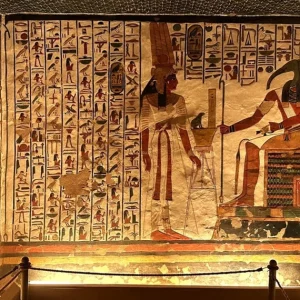
The valley contains over 60 discovered subterranean tombs (designated as KV1 to KV65), each carved hundreds of feet into solid limestone bedrock. Rather than outer monuments, these subterranean complexes feature long descending corridors, ritual pillared halls, and vaulted burial chambers adorned with astonishingly vivid wall paintings that remain vibrant after 3,000 years.
Sacred Books of the Underworld: Funerary Art
The wall reliefs inside the tombs are not merely decorative; they are sacred funerary texts designed to guide the deceased king through the nocturnal dangers of the underworld. Key sacred texts carved and painted in brilliant blues, greens, yellows, and golds include:
-
The Book of the Amduat: Depicting the twelve hours of the night and the sun god’s perilous journey through dark caverns to achieve rebirth at dawn.
-
The Book of Gates & Book of Caverns: Outlining the trial of the heart, guardian demons, and the journey toward resurrection alongside Osiris.
-
The Book of the Heavens: Featuring vast ceiling paintings depicting the sky goddess Nut swallowing and giving birth to the sun.
Iconic Tombs: From Tutankhamun to Seti I
While every accessible tomb in the valley offers extraordinary artistry, several stand out for their historic significance and preservation:
-
Tomb of Tutankhamun (KV62): Discovered in 1922 by British archaeologist Howard Carter, this tomb became world-famous because its vast gold treasures remained almost untouched for 3,300 years. Today, the physical mummy of the young pharaoh remains on display inside a climate-controlled glass case within the tomb’s burial chamber.
-
Tomb of Seti I (KV17): The longest, deepest, and most richly decorated tomb in the valley. Stretching over 137 meters into the rock, its delicate raised reliefs, painted astronomical ceiling, and alabaster sarcophagus room represent the absolute masterpiece of Pharaonic art.
-
Tomb of Ramses VI (KV9): Renowned for its exceptionally preserved descending hall and its breathtaking vaulted burial chamber ceiling illustrating the cosmic cycle of Nut and Ra.
Hatshepsut’s Mortuary Temple: A Masterpiece of Classical Architecture
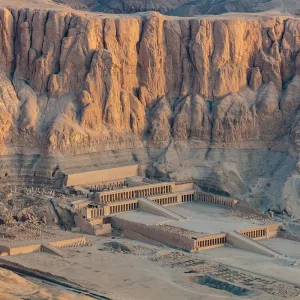
Nestled dramatically against the sheer, towering cliffs of Deir el-Bahari, the Mortuary Temple of Queen Hatshepsut (Djeser-Djeseru, meaning “Holy of Holies”) is one of the most visually striking buildings of the ancient world.
Designed by Hatshepsut’s brilliant royal architect, Senenmut, the temple rises across three grand, rising terraces connected by sweeping central ramps:
-
Harmonious Landscape Integration: The colonnaded porticoes line up seamlessly with the natural vertical striations of the limestone cliffs behind it, anticipating modern organic architecture by thousands of years.
-
Proclamation of Divine Royalty: As one of ancient Egypt’s few female pharaohs, Hatshepsut used the temple walls to legitimize her reign, depicting her divine birth from the god Amun-Ra and her coronation as ruler of Upper and Lower Egypt.
Historic Reliefs: The Expedition to Punt and Sacred Chapels
The colonnades of Hatshepsut’s temple hold some of the finest narrative reliefs in ancient art history:
-
The Voyage to the Land of Punt: Intricate wall carvings documenting a famous naval trade expedition sent to the Horn of Africa (Punt) to bring back frankincense trees, myrrh, gold, ebony, and exotic animals.
-
The Hathor and Anubis Chapels: Dedicated to the goddess of joy and protection (Hathor) and the jackal-headed god of mummification (Anubis), featuring beautifully preserved capitals topped with Hathor’s cow-eared face.
The Colossi of Memnon and the Ramesseum
A comprehensive visit to Luxor’s West Bank extends beyond the Valley of the Kings and Hatshepsut’s temple to include neighboring royal monuments:
-
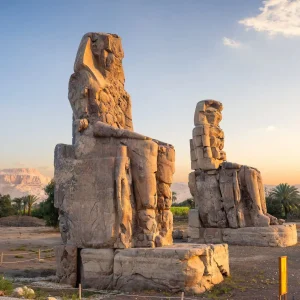
The Colossi of Memnon: Twin 18-meter-tall monolithic quartzite statues of Pharaoh Amenhotep III that have stood guard on the edge of the desert floodplain for over 3,400 years.
-
The Ramesseum: The grand memorial temple built by Ramses II, famous for its fallen 1,000-ton colossal granite statue that inspired Percy Bysshe Shelley’s famous poem Ozymandias.
Practical Visitor Guide: Navigating Luxor’s West Bank
To maximize your tour of the West Bank monuments, follow these essential travel recommendations:
-
Beat the Midday Heat: The West Bank reaches extremely high temperatures by noon. Arrive early at opening time (6:00 AM) to tour the subterranean tombs while temperatures are comfortable and crowds are minimal.
-
Ticketing Rules: A standard Valley of the Kings general ticket grants entry to three standard tombs. Special extra tickets are required to enter Tutankhamun (KV62), Seti I (KV17), and Ramses VI (KV9).
-
Photography Permits: Smartphone photography is generally allowed, but flash photography is strictly prohibited inside the tombs to protect the delicate ancient wall pigments from light damage.
Conclusion: Immortality Carved in Stone
The West Bank of Luxor remains an unparalleled testament to ancient humanity’s search for eternity. From the dark, subterranean painted corridors of the Valley of the Kings to the sunlit, soaring terraces of Hatshepsut’s temple, these monuments continue to reveal the timeless dreams, faith, and artistic brilliance of the pharaohs.
Comment (0)